In the Midtones: Learning to See Through Others (Without Becoming Them)
There’s a phase in photography where everything you shoot feels like a reaction.
You see something you admire—light, structure, atmosphere—and you go out trying to recreate it. Not copying, but chasing something you don’t fully understand yet.
Lately, that’s changed.
I’m still influenced—but I’m no longer chasing images.
I’m starting to understand the decisions behind them.
Structure Before Subject
My Frame
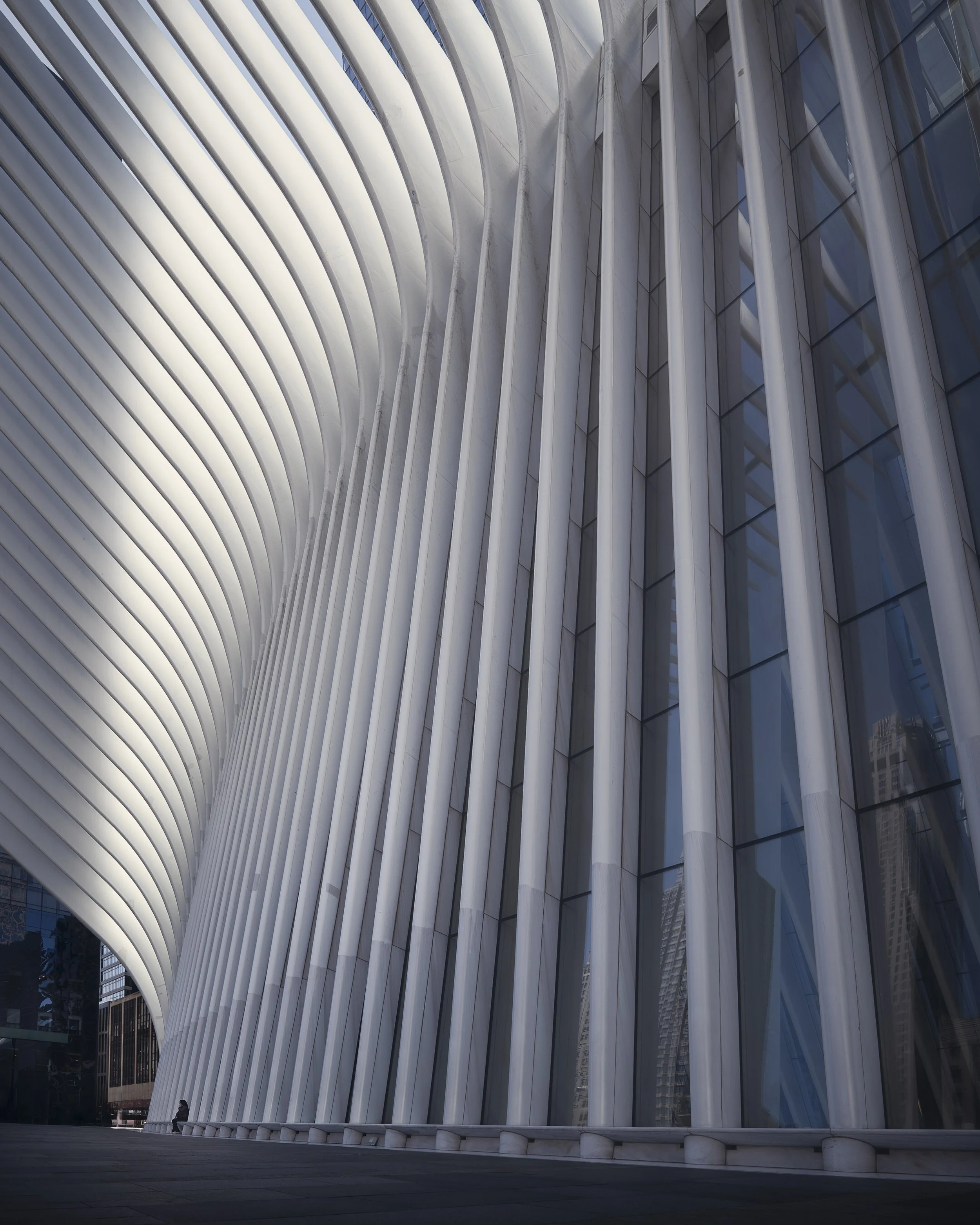
“Bearing” - NYC (All images © The Contented Clicker Photography)
What pulled me into this scene wasn’t the location—it was the rhythm.
The repetition. The way light moves across the ribs. The sense that the building itself is doing the work.
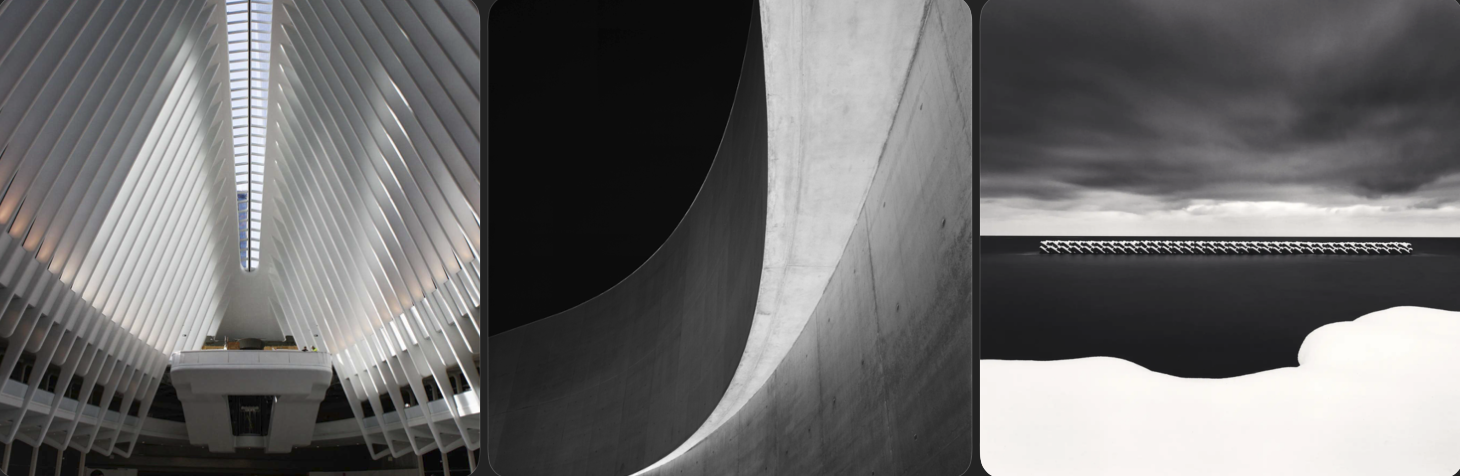
You see this in Michael Kenna—repetition as language. And in Hélène Binet—light as structure.
But here’s the shift: I kept the person in.
Not as a subject—but as scale. As grounding.
Technical decisions:
Slightly wider focal length to exaggerate curvature
Highlights pushed close to the edge, but protected
Contrast softened in post so whites retain texture
This isn’t minimalism.
It’s precision with context.
Stillness Inside Motion
My Frame
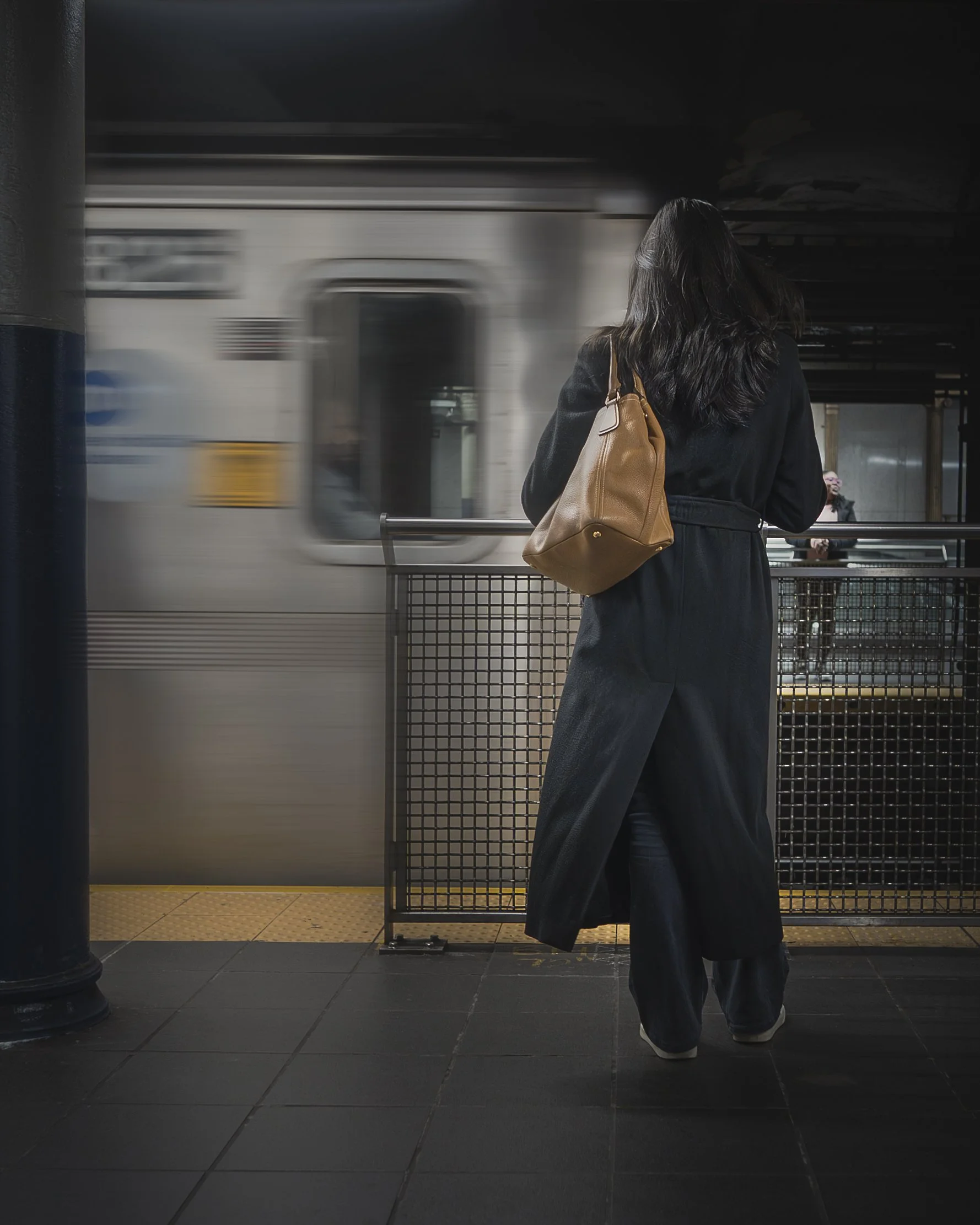
“Transit” - NYC (All images © The Contented Clicker Photography)
This image only works because something doesn’t move.
The train is motion. The world is motion.
But the subject is still.
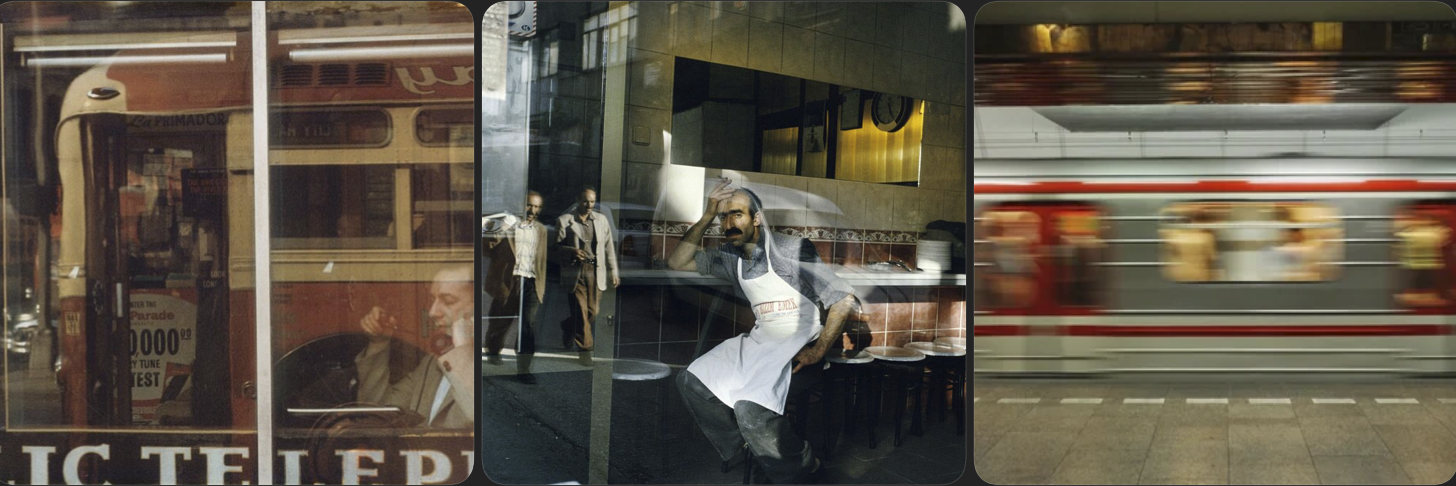
That idea—motion as a veil—shows up in Saul Leiter.
Layered space shows up in Alex Webb.
But I’m not chasing complexity.
I’m simplifying it.
Technical decisions:
Shutter around 1/10–1/20 to blur motion but retain form
Waiting for subject placement—not reacting to it
Color separation (warm subject vs cool environment) preserved in edit
The scene is chaotic.
The image isn’t.
Light as a Stage
My Frame
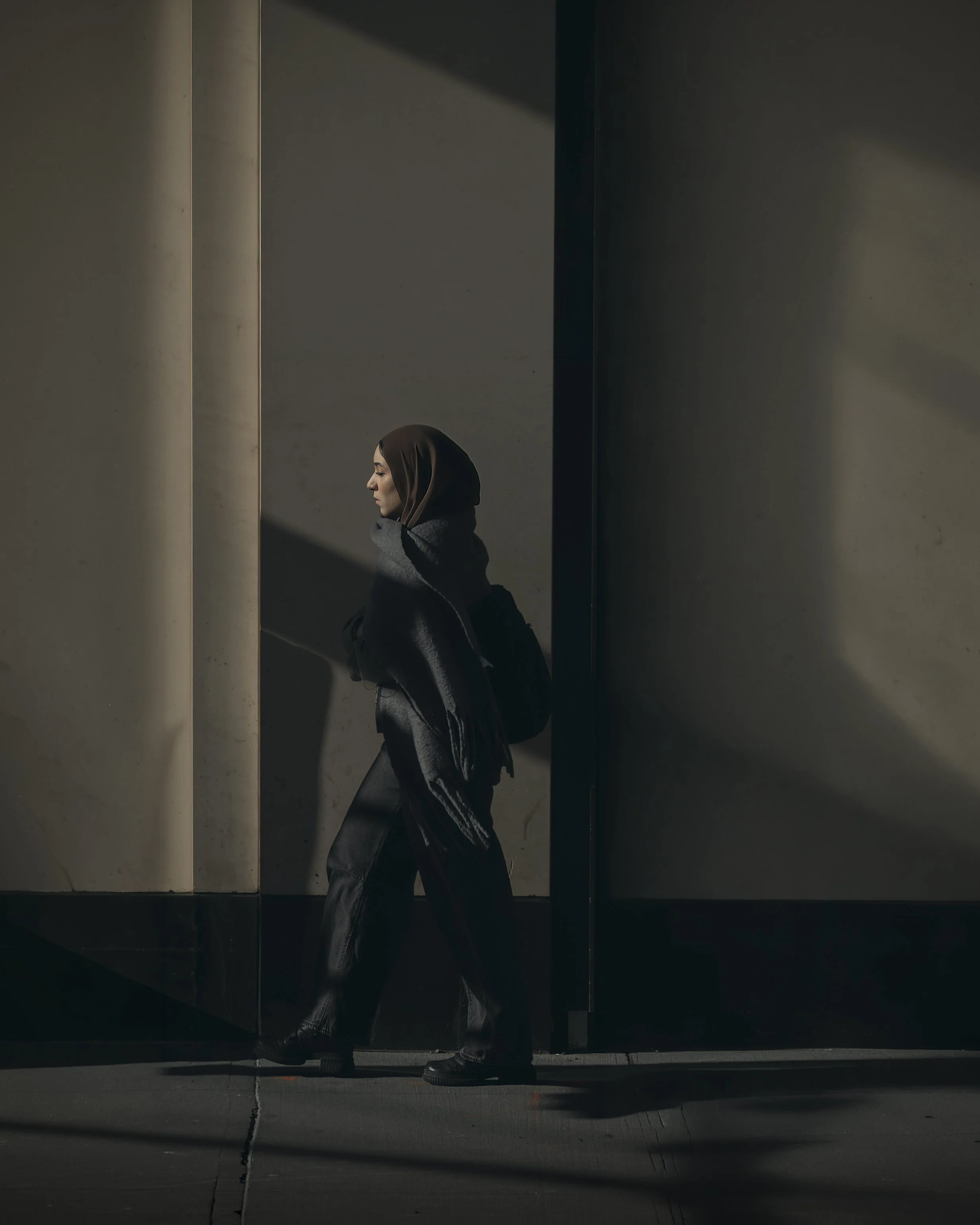
“Transition” - NYC (All images © The Contented Clicker Photography)
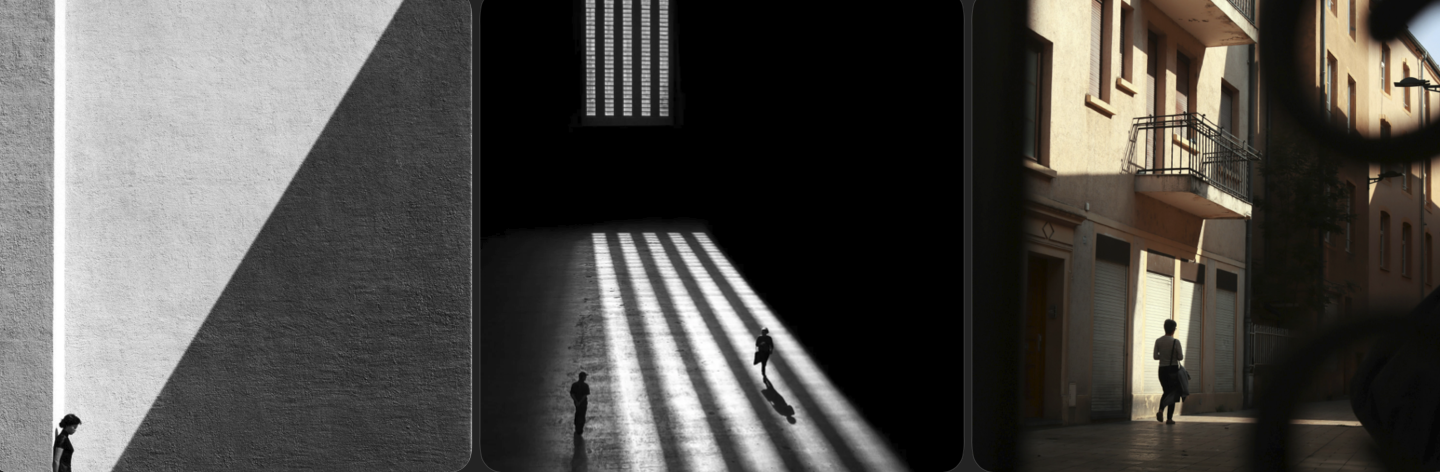
This is where influence is most obvious—and where the difference matters most.
Hard light. Deep shadow. A subject crossing through it.
You can’t ignore Fan Ho here. Or Alan Schaller.
But I stayed in color.
Barely—but intentionally.
Technical decisions:
Exposure biased toward highlights
Shadows allowed to fall naturally, not crushed
Color desaturated—not removed
This isn’t graphic contrast.
It’s controlled tension.
Atmosphere Without Intervention
My Frame
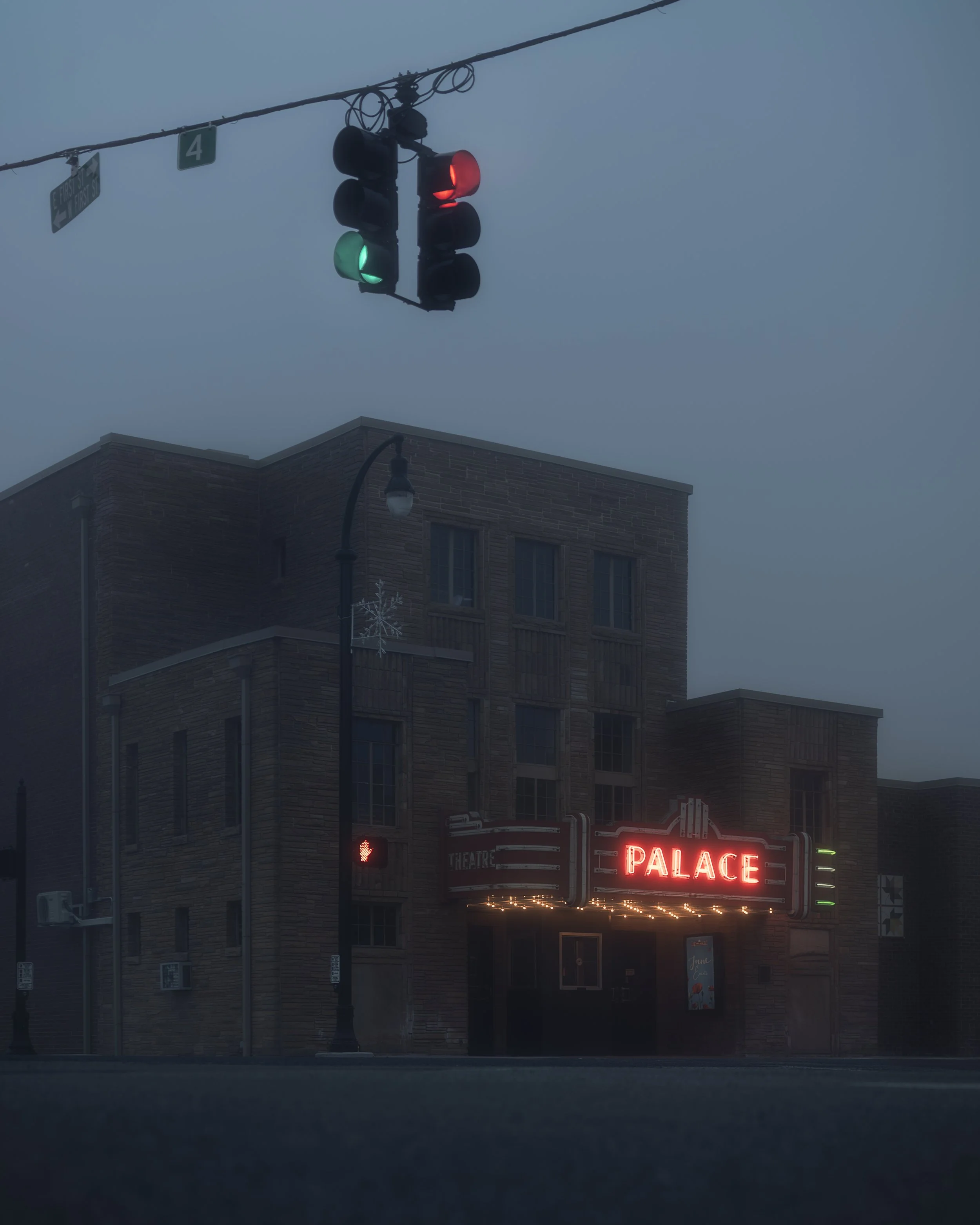
“Matinee” - Cumberland County, TN (All images © The Contented Clicker Photography)
This one is quieter—but it lingers longer.
Fog. Neon. Empty street.
It feels like something just happened—or is about to.
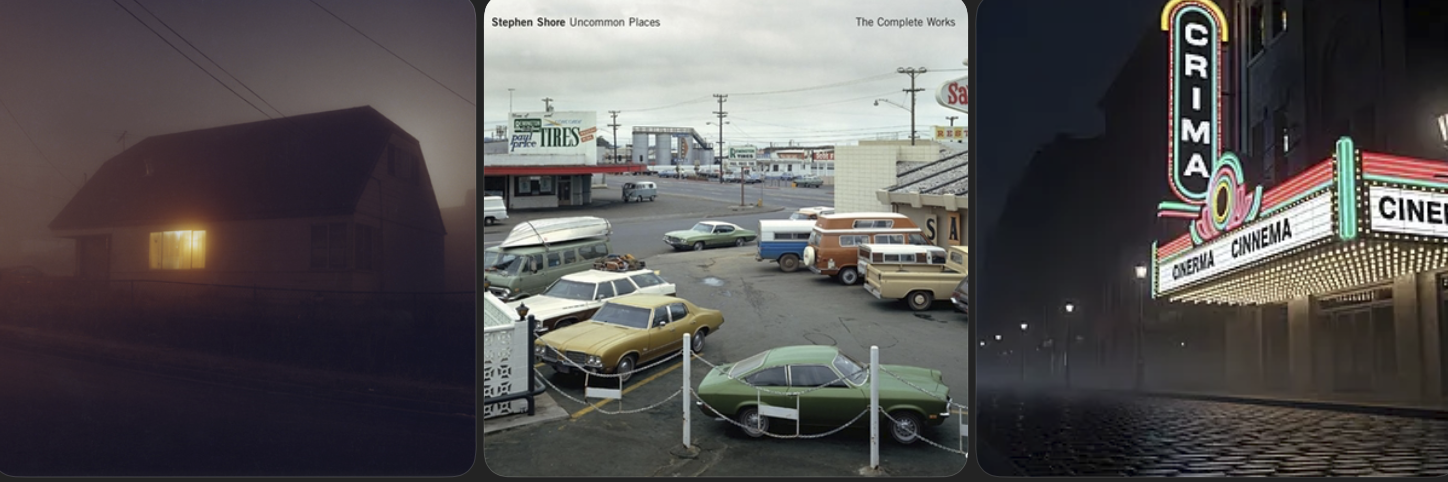
That tone exists in Todd Hido.
The observational honesty comes from Stephen Shore.
But this wasn’t staged.
No setup. No manipulation.
Just recognition—and restraint.
Technical decisions
Slight underexposure to protect neon
Letting atmosphere carry highlights instead of boosting clarity
Avoiding over-processing (which kills mood instantly)
Sometimes the best move is to do less.
Time as a Compositional Tool
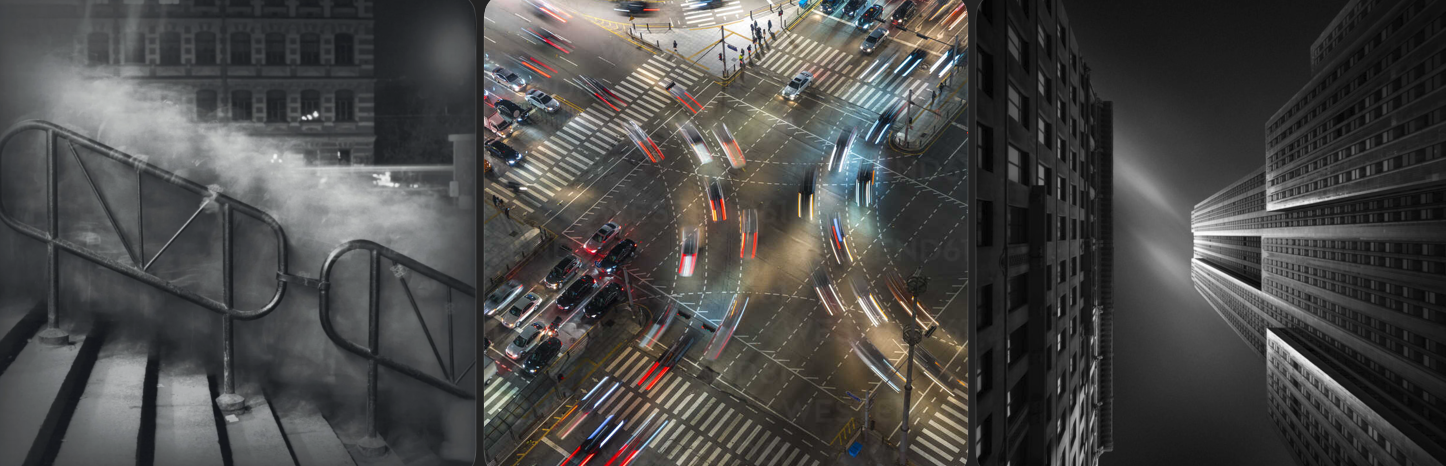
My Frame
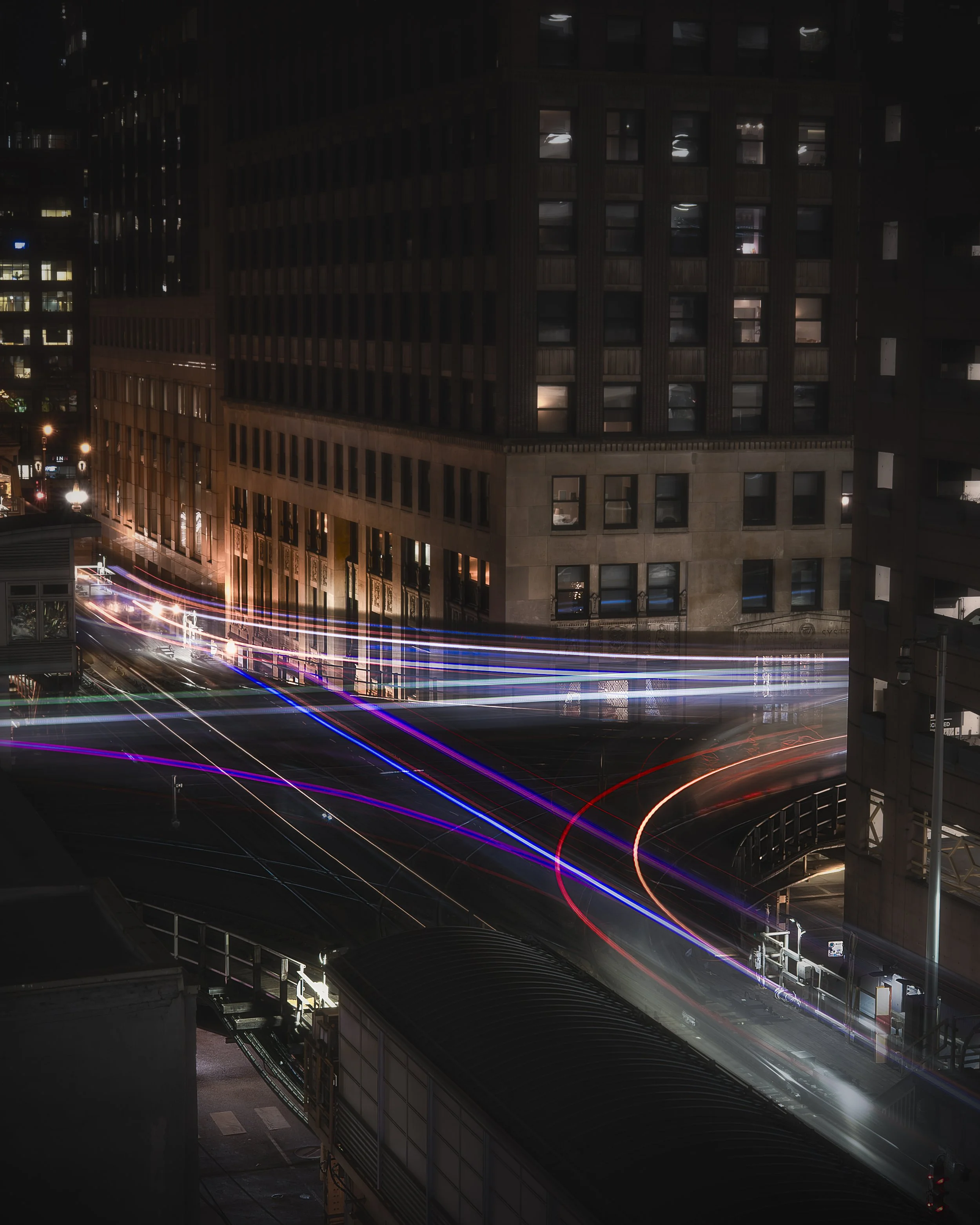
“Current” - Chicago (All images © The Contented Clicker Photography)
Long exposure can easily become effect over intention.
So the question becomes: is motion the subject—or the tool?
In Alexey Titarenko, motion is atmosphere.
In Kenna, it’s calm.
Here, it’s structure.
Technical decisions:
Composition locked before exposure decisions
Trails aligned with architectural lines
Color preserved to reinforce direction
The motion isn’t random.
It’s designed.
What Changed
This isn’t about influence going away.
It’s about it becoming quieter.
Less about what I’m shooting.
More about how I’m choosing.
What stays
What goes
What gets emphasized
What gets ignored
Where This Is Going
If there’s a thread running through all of this, it’s simple:
Structure matters
Light directs
People anchor
Restraint wins
I’m not trying to replicate the work that influenced me.
I’m trying to understand it well enough that I don’t need to think about it anymore.
And I think I’m getting closer.
Influences & References
The images referenced alongside this work are drawn from the following photographers, whose approaches to light, structure, and composition have shaped how I see and shoot:
Selected industrial and landscape studies (e.g., “Study 222, Rouge, France”)
Architectural studies, including work on the MAXXI Museum (Zaha Hadid)
Color street photography, including “Bus, 1954”
Layered street photography exploring color and spatial complexity
Light-driven street photography, including “Approaching Shadow”
Minimalist black and white street compositions
Atmospheric suburban and nocturnal landscapes, including “House Hunting”
Color documentary work, including “Uncommon Places”
Alexey Titarenko
Long exposure urban series, including “City of Shadows”